
Helping You Hear Your Best With Accurate Fitting Technology & Techniques
When it comes to helping you hear your best, it’s important to achieve accurate settings within hearing devices. That’s why we incorporate the Real Ear Probe Microphone Fitting System (REM) into our hearing aid programming.
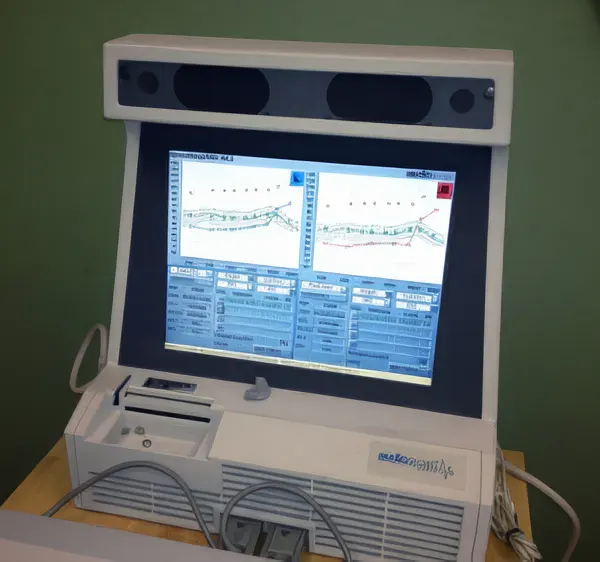
What Is Real-Ear Measurement?
The real-ear measurement system is one tool used to gauge the output response of a hearing device when it’s positioned in your ear canal. The testing can be completed using a variety of sounds and, more importantly, speech signals to validate the most comfortable and appropriate fitting and programming settings for each of your ears.
How Does It Work?
The real-ear measuring process is simple: a small tube (probe microphone) is placed into your ear canal, and measurements are taken alongside your hearing aids. Then your hearing care provider adjusts and programs your devices based on your hearing test results and ear canal volume using real-ear measurement software.
The results show what the desired output should be according to your hearing evaluation and other factors, as well as how the device is actually performing while in your ear. These measurements can add more information to assist in your fitting, because output can be impacted by the shape and configuration of your ear canal. This can be helpful in making small adjustments that can profoundly affect your hearing experience.
This ensures your hearing aid prescription is customized specifically for you and your ears.
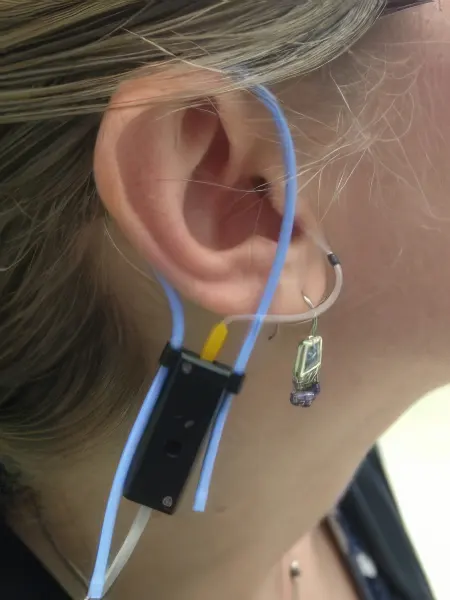
Why Does It Matter?
Since every ear canal is shaped differently, it is important for our providers to use real-ear verification measurements to make specific adjustments to the hearing aids. This is done for new fittings as well as for adjustments at the annual hearing checkup.
It’s all about ensuring the best possible listening outcomes. Not only does the REM system “represent the only objective measure of sound between the medial end of the hearing aid and the [eardrum],” according to an American Academy of Audiology news report on the relevant research, but studies appear to indicate that hearing aid users gain more benefit from the measurement-based fittings.
The Academy reported that in one of the studies, for example, a majority of the participants — all well versed in wearing hearing devices — “preferred the sounds of their hearing aids programmed to the verified prescription” rather than fittings based on predictive models or guidelines. In short, fittings based on actual measurements can make a difference in your better-hearing experience!
Although hearing aid technology is constantly improving, it’s critical that hearing-care professionals have a multitude of tools to verify the settings and ensure the devices are working properly. Every ear canal is shaped differently, every patient’s sound processing is unique, and every patient’s lifestyle is individual, making it crucial to offer real-ear verification measurements for patient-specific adjustments to the hearing aids.
Read Our Hearing Care Articles
-
Hearing Checkups: Why Early Action Can Make a Difference
Could subtle hearing changes be slipping past your notice? Establishing a baseline evaluation helps protect your connection to loved ones as years go by
-
Hearing Aid Fittings Designed Around You
Are you getting the most out of your devices? Modern hearing technology delivers the best results when customized directly to your unique ears and daily routines
-
The Role Hearing Plays in Everyday Safety
How does your hearing impact your balance and spatial awareness? Small sounds act as an early-warning system that helps you stay safe and independent every day